Billing Code Guide
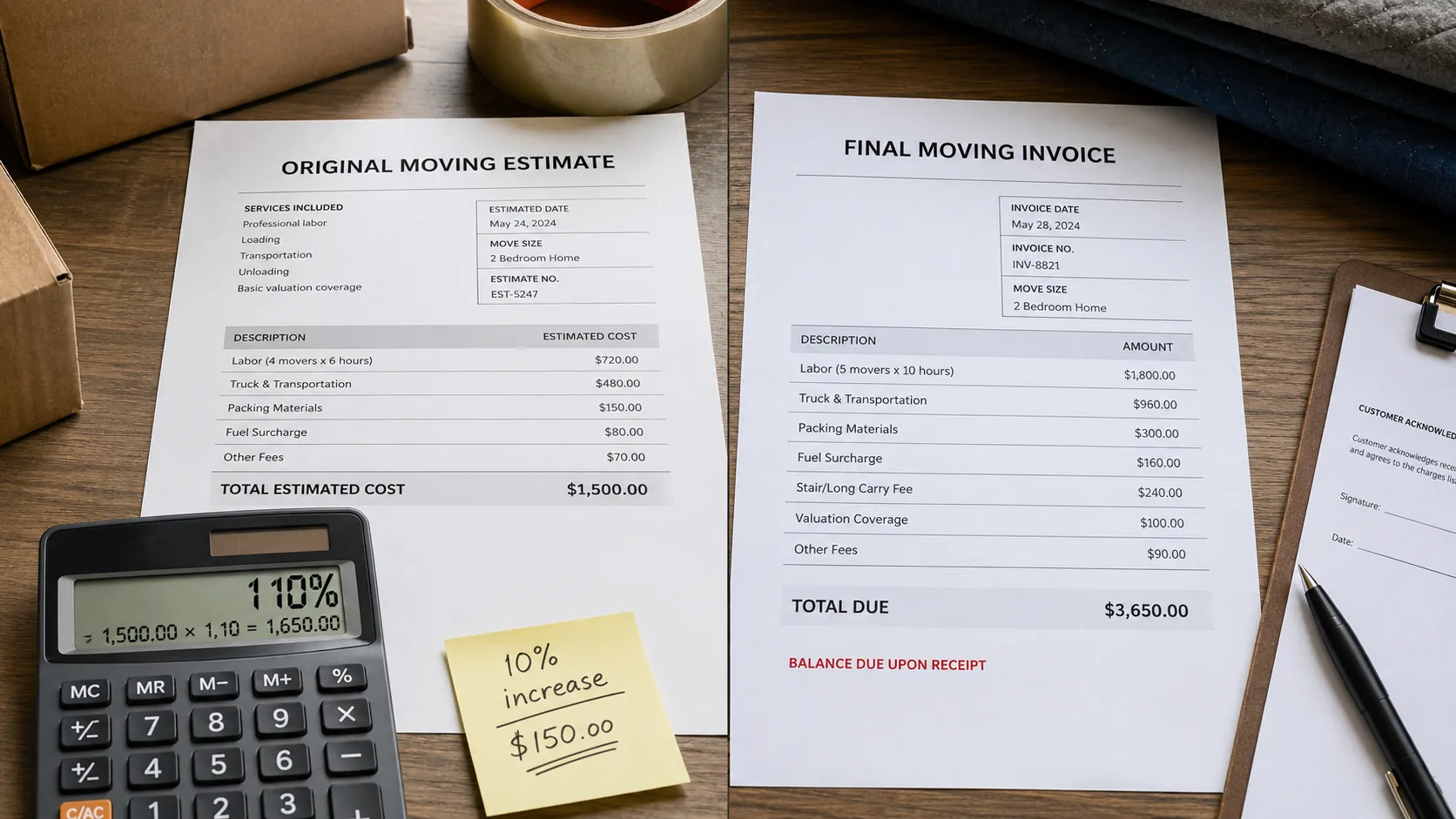
How to Dispute a Non-Binding Moving Estimate That Doubled on Delivery Day
A non-binding estimate is not a blank check. Use the 110 percent rule, original estimate, Bill of Lading, and tariff documents to challenge a doubled moving demand.
Executive Summary
Quick Summary- A non-binding moving estimate that doubles on delivery day should be disputed by calculating the lawful delivery amount and demanding the original estimate, Bill of Lading, tariff, and any valid revised estimate.
- Non-binding does not mean unlimited. Federal household-goods rules limit what many interstate carriers can demand before releasing goods.
- The biggest red flag is a revised estimate or new charge presented after the mover already has your belongings.
- GetTrueCharge can turn the estimate and invoice into a written demand that cites the exact charge mismatch.
Check your exact bill
Upload the moving paperwork. We show a free preview of the strongest estimate, tariff, or scale-ticket issue before checkout.
Direct answer
Non-Binding Does Not Mean Whatever They Want
A non-binding estimate means the final price may change based on actual weight or services, but it does not erase consumer protections. If the delivery demand is suddenly double and the mover is refusing to unload, the dispute should focus on the delivery collection rule, the signed estimate, and the documents proving any extra charges.
| Issue | Document | Question |
|---|---|---|
| Doubled total | Original signed estimate | What was the original maximum delivery demand? |
| New services | Revised estimate | Was it agreed before loading? |
| Extra weight | Certified scale tickets | Are the tickets valid and shipment-specific? |
Evidence
What to Send the Carrier
Your first written message should not be emotional. It should attach the estimate, name the lawful tender amount, request the charge documents, and ask the carrier to release the shipment.
- Original estimate and all pages of the Bill of Lading.
- Any revised estimate and the time it was signed.
- Tariff pages for each added fee.
- Scale tickets if weight changed.
Need the calculation checked?
Audit the non-binding estimate
Action
Use a Delivery Demand Script
Script
I am ready to tender the lawful delivery amount under the signed estimate. Please release the shipment and provide the tariff, scale, and revised-estimate documents for any disputed excess balance.
Frequently Asked Questions
Can a non-binding moving estimate increase?
Yes, but the mover still needs a valid basis for the increase and may be limited in what it can demand before unloading.
What if I signed a revised estimate?
Timing matters. A revised estimate signed before loading is different from a new demand after your goods are already on the truck.
What records should I save?
Save estimates, BOL pages, invoices, texts, emails, payment demands, driver names, truck numbers, and photos of delivery conditions.
Sources Cited
Your Rights and Responsibilities When You Move
Federal Motor Carrier Safety AdministrationFederal consumer guidance for interstate household goods moves, estimates, delivery demands, and mover obligations.
49 CFR Part 375
Electronic Code of Federal RegulationsFederal household goods transportation rules covering estimates, Bills of Lading, collection, weighing, and delivery.
Tariff Guidance
Surface Transportation BoardOfficial guidance on tariffs, rates, accessorial charges, and household-goods service terms.
Household Goods Moving Fraud
U.S. Department of Transportation Office of Inspector GeneralDOT-OIG overview of moving fraud patterns including hostage loads, lowball estimates, and inflated charges.
Operation Protect Your Move
Federal Motor Carrier Safety AdministrationFMCSA enforcement initiative targeting household-goods carriers and brokers with severe consumer complaints.
Disclaimer
This article is educational information, not legal, financial, insurance, or transportation-law advice. Moving rules vary by shipment type and facts. GetTrueCharge provides document review and dispute drafting support, but does not guarantee delivery, refund, or enforcement action.
Related Audits
Moving Company Holding Furniture Hostage Over Weight Bumping Fees? Do This Immediately
If a mover demands extra money for sudden weight changes, ask for certified tare and gross weight tickets, the Bill of Lading, and the lawful delivery amount before paying.
Read guide
Movers Added a Long Carry Fee and Stair Fee on Delivery Day That Wasn't on the Estimate
Surprise accessorial fees need tariff support and estimate disclosure. Here is how to challenge long carry, stair, shuttle, and bulky-item demands at delivery.
Read guide
Charged $200 for Shrink Wrap and Tape? How Movers Hide Profit in Packing Material Fees
Packing material fees need tariff support, estimate disclosure, and itemization. A vague $200 shrink-wrap charge can be challenged like any other accessorial.
Read guide
Interstate Mover Refuses to Provide Certified Scale Tickets After Charging for Extra Weight
Weight charges require proof. If your mover refuses to provide scale tickets, focus the dispute on tare, gross, re-weigh rights, and the Bill of Lading.
Read guide