Billing Code Guide
Charged $200 for Shrink Wrap and Tape? How Movers Hide Profit in Packing Material Fees
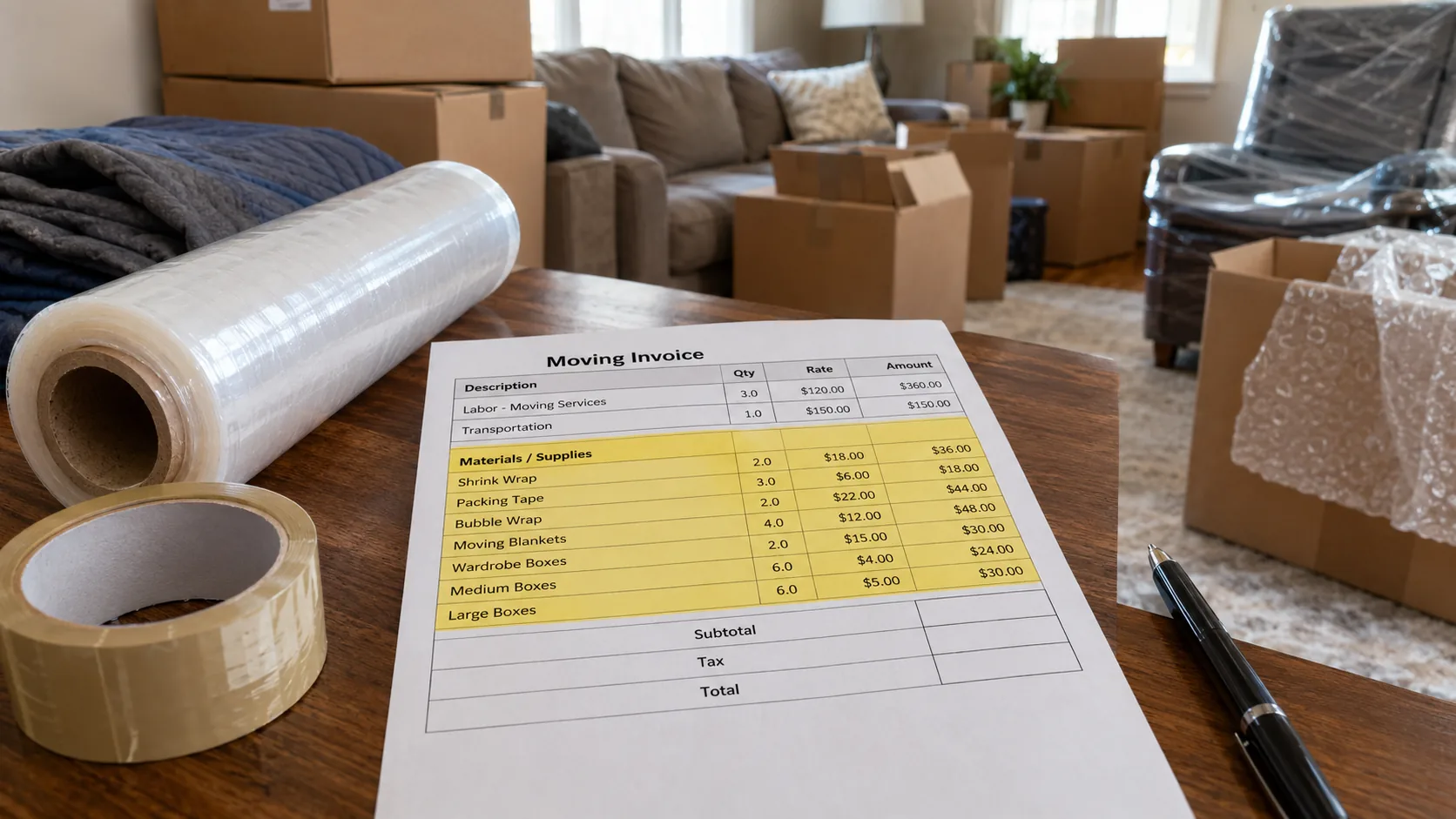
Packing material fees need tariff support, estimate disclosure, and itemization. A vague $200 shrink-wrap charge can be challenged like any other accessorial.
Executive Summary
Quick Summary- A $200 shrink-wrap or tape charge is worth disputing when it was not listed on the estimate, is missing from the tariff, or is billed as a vague lump sum with no material count.
- Movers can charge for packing materials, but the charge should be disclosed and tied to an actual service, quantity, or tariff line.
- Ask for the tariff page, original estimate, itemized materials, and inventory notes showing what was packed.
- GetTrueCharge can scan those documents and write a packing-fee dispute that targets the exact unsupported lines.
Check your exact bill
Upload the moving paperwork. We show a free preview of the strongest estimate, tariff, or scale-ticket issue before checkout.
Direct answer
Packing Materials Are Not a Blank Line Item
Packing fees become abusive when they are disclosed only after loading or delivery, bundled into a vague materials line, or used as leverage before unloading. A legitimate material charge should tie back to the tariff and to a real quantity or service.
| Charge | Support needed | Weakness |
|---|---|---|
| Shrink wrap | Tariff rate and item count | Flat $200 with no quantity |
| Tape | Packing supply rate or actual itemization | No estimate disclosure |
| Packing labor | Service ordered and inventory notes | Billed after loading under pressure |
Evidence
Demand the Tariff and Inventory Together
- Tariff page for packing materials and packing labor.
- Original estimate showing packing service or self-pack terms.
- Inventory sheets showing which items were wrapped or boxed.
- Receipts, material counts, or a line-item explanation for lump-sum charges.
Have the packing invoice?
Check the material fees
Action
Write It as a Tariff Dispute
Request
Please identify the tariff rate, quantity, and estimate authorization for each packing material charge, including shrink wrap, tape, boxes, and packing labor.
Frequently Asked Questions
Can movers charge for packing materials?
Yes, when the charge is properly disclosed, tariff-supported, and tied to actual materials or services. The problem is an unsupported delivery-day lump sum.
What if I asked the movers to wrap items?
That may support a fee, but the mover should still show the rate, quantity, and written basis for the amount.
Why does the tariff matter?
For interstate household-goods moves, tariffs are the carrier's published charge rules. They help verify whether a fee exists and how it should be calculated.
Sources Cited
Your Rights and Responsibilities When You Move
Federal Motor Carrier Safety AdministrationFederal consumer guidance for interstate household goods moves, estimates, delivery demands, and mover obligations.
49 CFR Part 375
Electronic Code of Federal RegulationsFederal household goods transportation rules covering estimates, Bills of Lading, collection, weighing, and delivery.
Tariff Guidance
Surface Transportation BoardOfficial guidance on tariffs, rates, accessorial charges, and household-goods service terms.
Household Goods Moving Fraud
U.S. Department of Transportation Office of Inspector GeneralDOT-OIG overview of moving fraud patterns including hostage loads, lowball estimates, and inflated charges.
Operation Protect Your Move
Federal Motor Carrier Safety AdministrationFMCSA enforcement initiative targeting household-goods carriers and brokers with severe consumer complaints.
Disclaimer
This article is educational information, not legal, financial, insurance, or transportation-law advice. Moving rules vary by shipment type and facts. GetTrueCharge provides document review and dispute drafting support, but does not guarantee delivery, refund, or enforcement action.
Related Audits
Moving Company Holding Furniture Hostage Over Weight Bumping Fees? Do This Immediately
If a mover demands extra money for sudden weight changes, ask for certified tare and gross weight tickets, the Bill of Lading, and the lawful delivery amount before paying.
Read guide
Movers Added a Long Carry Fee and Stair Fee on Delivery Day That Wasn't on the Estimate
Surprise accessorial fees need tariff support and estimate disclosure. Here is how to challenge long carry, stair, shuttle, and bulky-item demands at delivery.
Read guide
How to Dispute a Non-Binding Moving Estimate That Doubled on Delivery Day
A non-binding estimate is not a blank check. Use the 110 percent rule, original estimate, Bill of Lading, and tariff documents to challenge a doubled moving demand.
Read guide
Interstate Mover Refuses to Provide Certified Scale Tickets After Charging for Extra Weight
Weight charges require proof. If your mover refuses to provide scale tickets, focus the dispute on tare, gross, re-weigh rights, and the Bill of Lading.
Read guide